
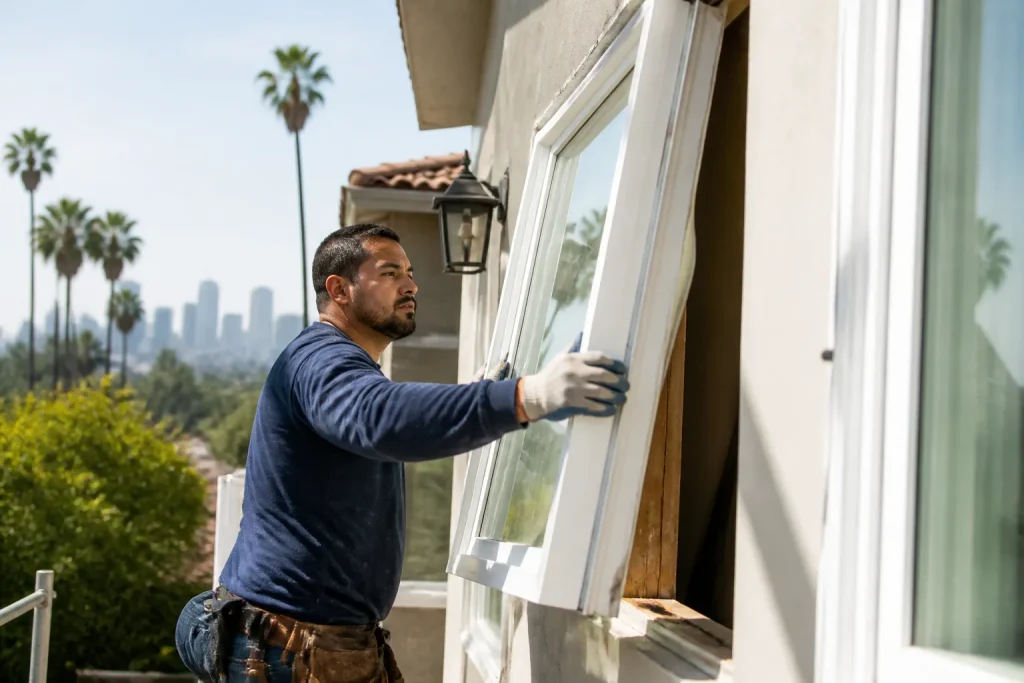
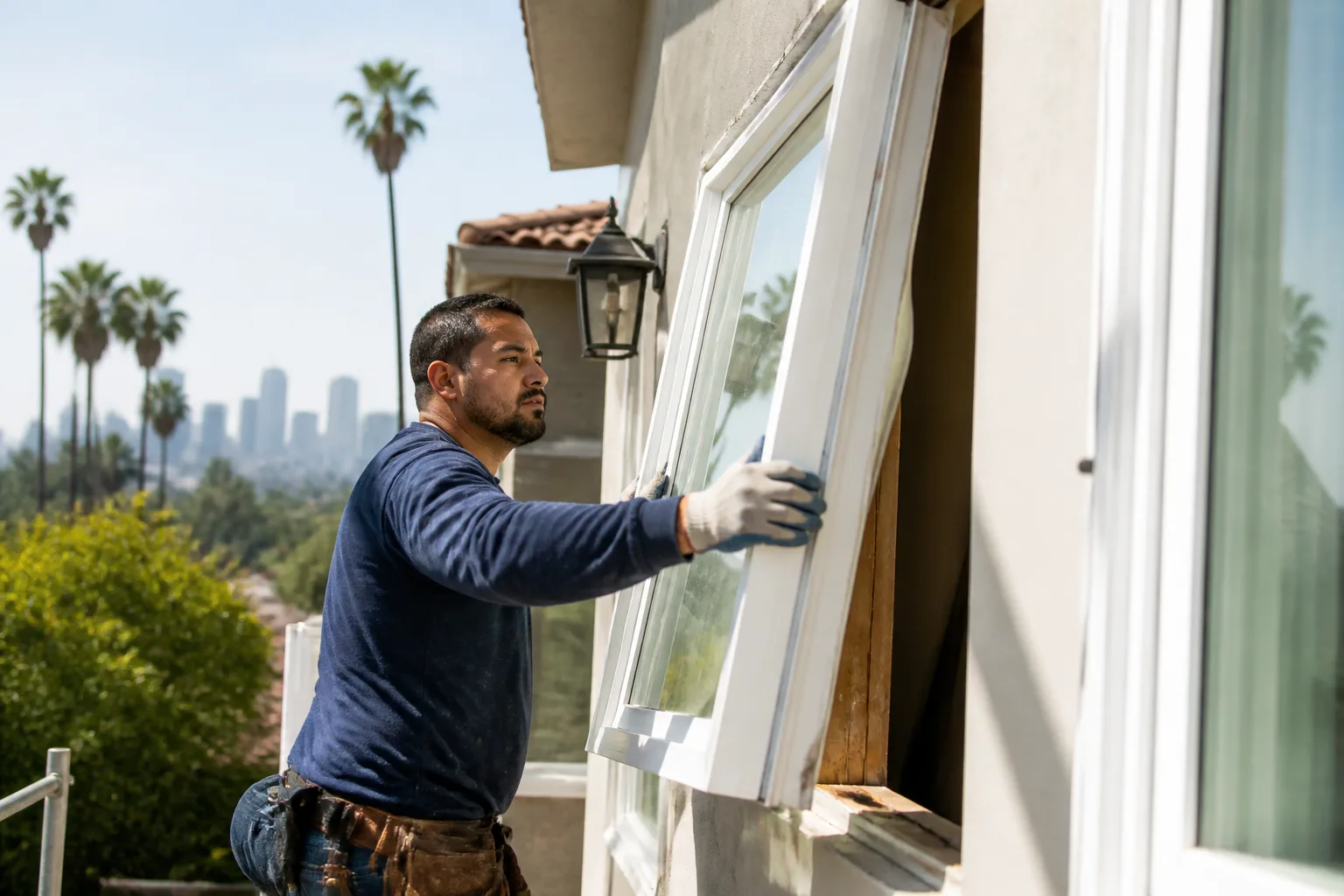
5 Mistakes to Avoid With Window Replacement
The most expensive window replacement mistakes happen before a single pane is ordered. In Los Angeles, the costliest error we see is a homeowner accepting a lump-sum quote, skipping the permit conversation, and discovering the problem when the city flags the job or a buyer walks during escrow. Avoiding these five mistakes costs nothing but a few pointed questions before you sign.
If you’d rather skip the legwork, call (682) 281-2168 and talk it through with us directly. But if you’re in research mode, here’s what actually goes wrong and how to sidestep each one.
Mistake #1: Accepting a Lump-Sum Quote Without a Line-Item Breakdown
Window replacement quotes in Los Angeles often arrive as one number: $14,000 for eight windows. That number tells you nothing. It hides what you’re paying for product, what you’re paying for labor, whether permits are included or “handled later,” and what happens to the old windows.
A proper quote separates the job into at least four categories: product cost by window line, labor per opening, permit fees, and haul-away or disposal. Without that breakdown, you can’t compare one bid to another, and you can’t challenge a change order when the installer says the rough opening “wasn’t what we expected” and adds $800 per window to the bill.
We write every quote with the product, labor, permit, and disposal costs itemized before any work starts. The day the crew shows up, you already know the total. If the scope doesn’t change, the price doesn’t change. That’s the only format worth signing.
The takeaway: If a contractor won’t give you a line-item breakdown, that’s the first warning sign. In our experience, a vague quote is a future surprise invoice with a different number at the bottom.
Mistake #2: Skipping the Permit Because “Nobody Checks”
This is the most expensive of the five mistakes in Los Angeles, and the one that quietly waits years to cost you. Some contractors will tell you a window replacement doesn’t need a permit, or that pulling one slows the job down, or that you can handle it later. Here’s what actually happens when you skip it.
An unpermitted window replacement becomes a problem at resale. Buyers in LA routinely ask for the permit record during escrow. When it’s missing, you’re facing one of three outcomes: the buyer demands a price reduction, the buyer walks, or the escrow is held while you apply for a retroactive permit, pay the fees, and hope the city’s inspector signs off on work that’s already behind stucco. Retroactive permits in Los Angeles typically cost more than the original permit would have, and inspection is never easier after the fact.
The permit also matters for code compliance. LA requires window replacements to meet Title 24 energy standards, and the permit triggers the inspection that confirms the work was done to code. No permit means no independent verification that the job was done right.
We pull permits on every job that requires one. The fee is on the quote as its own line item, so you see exactly what it costs. When the inspection passes, you get the paperwork. No surprises at closing.
The takeaway: Ask the contractor if a permit is required for your specific job, then ask where it appears on the written quote. If the answer is “we don’t need one” without a code reference, call the city yourself and verify.
Mistake #3: Choosing Glass by Price Without Checking the NFRC Label
Los Angeles sits in climate zone 6 under Title 24, which sets minimum energy performance standards for replacement windows. The key numbers live on a small white label from the National Fenestration Rating Council, or NFRC. Ignoring that label is the most common way homeowners overpay for comfort they never got.
The two numbers that matter in LA are U-factor and SHGC. U-factor measures how well the window resists heat transfer, lower is better, and in our climate anything at or below 0.30 is doing real work. SHGC, or solar heat gain coefficient, measures how much solar radiation the glass lets through, and for LA you want it low so your air conditioner isn’t fighting the sun all afternoon. A window with a SHGC around 0.25 is noticeably better in a west-facing room than one at 0.40.
Those numbers vary by glass package, not just by frame material. Two windows that look identical can perform entirely differently depending on the low-E coating and the gas fill between the panes. A $400 variance per window without an NFRC label to explain it is just marketing.
When you’re evaluating options, ask to see the NFRC label for the exact configuration being quoted. Our product lines include PGT, CGI, and ViewLux, and each has configurations that clear Title 24 by a comfortable margin, but the right choice depends on which side of the house the window faces. A north-facing bedroom in Silver Lake needs a different glass package than a west-facing living room in Woodland Hills.
The takeaway: Price per window means nothing without the U-factor and SHGC printed next to it. Check the label before you sign.
Mistake #4: Ignoring the Rough Opening
Older Los Angeles homes don’t sit square. Stucco settles. Framing shifts. The rough opening, the actual hole in the wall where the window sits, is often out of square by a quarter inch or more, especially in pre-1980 homes in neighborhoods like West Adams or Highland Park.
An installer who measures the visible window and orders a replacement to those dimensions is guessing. The replacement goes in, the gaps get shimmed, and either the window binds when it opens or the installer buries unsealed gaps behind trim that no one will see for twenty years. Air leaks in, water follows, and the repair bill lands long after the warranty expired.
There’s a second version of this mistake we see regularly: an installer notices the opening is out of square, “fixes” it without telling you, and hands you an unexpected invoice for the extra labor. The phrase to listen for is “your opening needed more work than we quoted.” That’s a change order, and it should have been identified before the job started, not after.
The right approach is to measure every rough opening during the estimate, note anything out of square, and put any related labor on the written quote up front. On older stucco homes, we often find openings that need minor reframing or additional flashing detail, and that cost belongs on the quote before you sign, not on a surprise invoice after demolition.
The takeaway: Before signing, ask: “Did you measure the rough openings, and are any of them out of square?” If the installer can’t answer, keep looking.
Mistake #5: No Written Completion Guarantee
A verbal “we warranty our work for a year” is worth exactly the paper it isn’t printed on. When a seal fails six months in, or a sash starts sticking, the person who told you it would be handled may not remember the conversation. And even if they do, there’s no enforceable commitment when the scope of “workmanship” was never written down.
A useful written guarantee names three things: what’s covered, how long it’s covered, and who confirms the work was done correctly in the first place.
Our standard is called the 365-Day Done Right Promise, and it’s in writing on every project. If a window or door we installed doesn’t perform the way it should within 365 days, we make it right, parts and labor. No charge, no argument. We also bring a second visit at no cost if a repair fails. If a window drops a seal two months after install, we’re back out to fix it, and if that fix doesn’t hold, we’re back again. That’s the whole point of putting it in writing.
This guarantee only works if it survives contact with a real problem. An installer who won’t commit to coverage terms in writing is telling you something about how they handle problems. Believe them.
The takeaway: Ask for the guarantee in writing, read what it covers, and confirm it covers parts and labor for at least a year. Verbal promises don’t hold up.
Key Takeaways Before You Sign Anything
- Demand a line-item quote that separates product, labor, permits, and haul-away. A lump sum is a blank check.
- Verify permit requirements for your job before signing. Unpermitted window work is a resale liability in Los Angeles, not a cost-saving shortcut.
- Check the NFRC label and confirm U-factor and SHGC meet Title 24 for your specific window orientation.
- Make sure the installer measured the rough openings, not just the visible frames, and put any opening-related work on the quote.
- Get the workmanship guarantee in writing with a named duration and clear coverage terms.
Related services in Los Angeles: If you’re planning a multi-window project, you can start with our Window Replacement in Los Angeles page. We handle Window Installation in Los Angeles and Door Replacement in Los Angeles as well, so a full opening, frame, and glass replacement can be handled by one team with one written price.
When to Call a Pro
A window replacement is one of those jobs where the expensive mistakes are invisible until it’s too late. You can’t see an unpermitted install behind a wall. You can’t feel a missing low-E coating by touching the glass. You won’t know the rough opening was guessed at until the window binds or the caulk fails.
We pulled an old aluminum slider out of a garage over in El Sereno last month where the previous installer had filled a half-inch gap with foam and called it done. The homeowner found out when the first real rain came through the wall. That repair cost nearly as much as the original install, and none of it was covered by anyone.
If you’re replacing windows in Los Angeles and want the mistakes caught before they become your problem, call (682) 281-2168 for a free estimate. We’ll measure the openings, check the permit requirements, talk through glass packages that actually fit your home’s orientation, and hand you a written line-item quote before anything starts.
For more on how we work, start at the Juniper Windows & Doors home page. Our team of background-checked, uniformed technicians installs PGT, CGI, ViewLux, and Therma-Tru products, and every job is backed by the 365-Day Done Right Promise in writing.
The Bottom Line
Every one of the five mistakes above traces back to the same root cause: a homeowner who didn’t ask the right questions before signing. Ask for the line-item quote. Ask about the permit. Ask to see the NFRC label. Ask about the rough openings. Ask for the guarantee in writing. Five questions, ten minutes, and you’ve eliminated most of what makes window replacement in Los Angeles go sideways.
If you’re planning a project and want to skip straight to an honest assessment, Juniper Windows & Doors offers free estimates. Call (682) 281-2168 or reach out through our site and we’ll walk you through the numbers, the permits, and the product options before you commit to anything.
Frequently Asked Questions
Window replacement in Los Angeles typically runs $800 to $1,800 per window installed, depending on the frame material, glass package, and whether the opening needs additional work. Mid-range vinyl with a Title 24-compliant low-E package usually lands around $900 to $1,200 per opening. For an exact quote with line-item pricing, call (682) 281-2168. Estimates are free.
Yes, Los Angeles requires a permit for most window replacements, and the work must meet Title 24 energy standards. The permit creates a record that matters at resale and triggers an inspection that verifies code compliance. Always confirm the permit is on the written quote before signing. Call (682) 281-2168 if you want help confirming the requirements for your specific home.
It shouldn’t, if the installer measured the rough openings during the estimate and put every cost on the quote up front. Price changes during window replacement usually come from openings that weren’t measured or permits that were never included. At Juniper Windows & Doors, every job gets a written line-item price before work starts, and the number doesn’t move unless the scope changes with your sign-off.
A typical full-home window replacement of eight to ten windows takes two to four days from start of demolition to final inspection. Single-window replacements are often done in a half day. Permitting and product lead times add anywhere from one to four weeks depending on the product line and city processing. We’ll give you a honest timeline on the quote.
Written by Sean Mackey, Owner at Juniper Windows & Doors, serving Los Angeles since 2001.
Need Windows & Doors Help?
Call Juniper Windows & Doors - licensed & insured, here with fast after-hours help in Los Angeles.
(682) 281-2168