
Preparing Your Home’s Windows & Doors for Winter in Los Angeles
Preparing your windows and doors for a Los Angeles winter means sealing air gaps, testing locking hardware, and clearing drainage paths before Santa Ana winds and El Niño rains arrive. Most LA homes need only a few hours of inspection and light maintenance, not a full weatherization overhaul. If you’d rather not DIY it, call (682) 281-2168 and we’ll handle the whole checklist for free.
Here’s the trap: LA winters feel mild, so nobody preps. Then a 60 mph Santa Ana gust flexes an unsealed frame, or a January rainstorm drives water sideways through a worn threshold, and suddenly you’re mopping up an entryway floor at 2 a.m. We’ve pulled warped, waterlogged door frames out of homes in Sherman Oaks and Pasadena where the only real problem was a $12 piece of weatherstripping that never got checked. The mildness is exactly why the damage catches people off guard.
Key Takeaways
- Santa Ana winds above 40 mph test window lock engagement and door seals harder than any cold snap.
- Weatherstripping on exterior doors typically fails within 3 – 5 years in LA’s sun and dry air.
- Condensation on interior glass is a humidity issue, not a window leak – and low U-factor glass helps.
- Weep holes on sliding windows and doors clog with LA dust and garden debris faster than you’d think.
- If a window or door won’t lock or seal even after you replace the weatherstripping, the frame has moved – call before you spend more on DIY.
Start With the Santa Ana Wind Test
Santa Ana winds regularly hit 40 – 60 mph in LA’s canyon and foothill neighborhoods, and that’s a completely different stress profile than a cold winter in Chicago. Cold makes materials contract. Wind makes them flex. A window that seals fine on a calm 65°F day can open up a 1/8-inch air gap when 50 mph gusts push against the frame. That gap is where the whistling comes from, and it’s also where rain gets driven in during a storm.
The test is simple. On a day with any real wind (or use a leaf blower on low from outside), run your hand slowly around the interior perimeter of each window. You’re feeling for airflow. Then do the same around every exterior door. The corners near the hinges and the latch side are the usual suspects. If you feel air, your weatherstripping or your sealant has a problem. If you don’t feel air on a calm day, that tells you nothing – you need wind pressure to find wind leaks.
Check Lock Engagement on Casement and Awning Windows
Here’s what most winter prep guides skip: the locking hardware. A casement window (crank-out) or awning window (hinged at the top, opens outward) creates its seal by pulling the sash tight against the frame when you engage the lock. If the lock doesn’t pull it tight, the weatherstripping isn’t compressed, and Santa Ana winds will push right past it.
Open the window an inch, then close it and turn the lock. Watch the corners of the sash as you go. They should visibly pull inward. If the window wiggles after you’ve locked it, or if the lock only engages partially, your hardware is worn or the sash has shifted. Multi-point locking hardware – locks that engage at two or three points along the sash instead of one – matters far more than frame material during high-wind events. It’s the difference between a window that holds up to wind load and one that flexes and leaks. We install multi-point locks on most impact-rated lines from ES Windows and CWS for exactly this reason.
Inspect Weatherstripping by Door Type
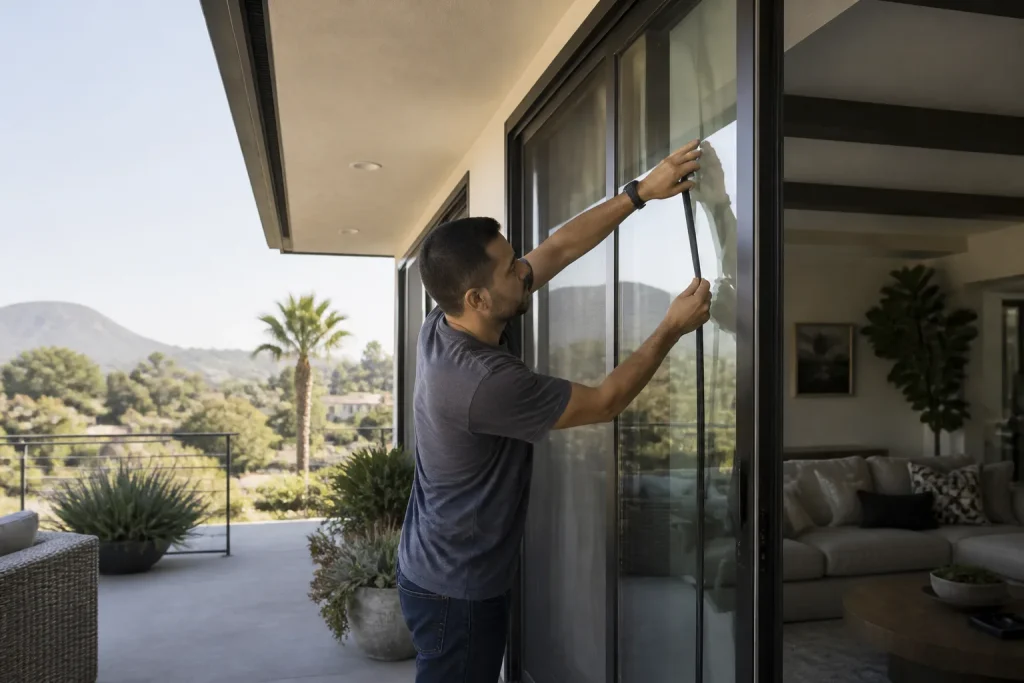
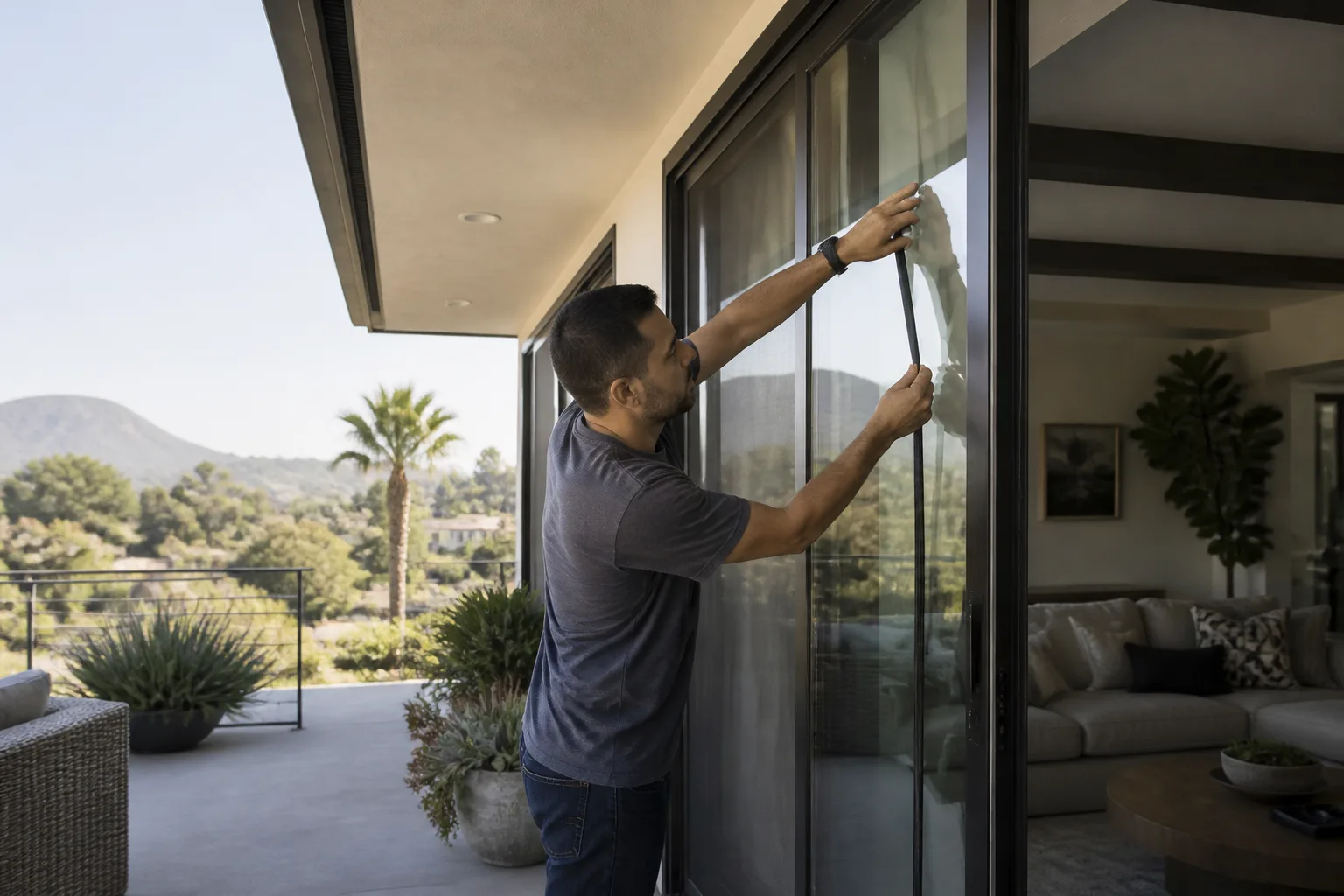
Exterior door weatherstripping fails in LA from sun exposure, not from freezing. Direct afternoon sun bakes the rubber bulb seals on west-facing doors until they crack and lose their spring. Once they lose their spring, they stop compressing against the door slab, and that’s when drafts, dust, and insects start coming in. The compression test takes about ten minutes:
- Bulb seals: Look at the rubber bulb running down the sides and top of the door frame. Press it with your thumbnail. It should spring back quickly. If it stays dented, feels stiff, or shows cracks, replace it. At Juniper Windows & Doors, we see this most often on doors in Encino and Woodland Hills that catch the full western sun.
- Threshold sweep: Close the door and look at the gap between the bottom of the door and the threshold. You should not see daylight. If you can slide a dollar bill under the door and pull it out without resistance at any point, the sweep is worn.
- Corner joints: Where the side seals meet the top seal, look for gaps or separation. Water driven by wind finds these corners first.
A decent bulb seal runs $10 – $30 per door at any hardware store, and replacing one is a 20-minute job. We still get calls asking us to do it, and we’re happy to, but most homeowners can handle this one themselves.
Clear Weep Holes Before El Niño Rains
Sliding windows and sliding patio doors have small drainage channels built into their bottom tracks, called weep holes. They’re the ¼-inch slots you’ve probably never noticed. Their job is to drain water that blows into the track back outside. When they clog, the track fills like a bathtub, and the water has nowhere to go except inside – over the track, under the frame, into the wall. During heavy El Niño rain events, a clogged weep hole can turn a 2-inch-deep track into an indoor waterfall.
Check them on every sliding unit in the house. You’re looking for the slots on the exterior side of the track. If you don’t see them at all, they’re buried under a decade of dust, pet hair, and plant debris. Use a small piece of wire, a pipe cleaner, or a bamboo skewer to clear them. Then test: pour a cup of water into the track from inside. It should drain out through the weep holes within a few seconds. If it pools, they’re still blocked. Do this before the first big rain, not during it.
Condensation on Interior Glass: It’s Humidity, Not a Leak
On LA’s coldest nights, when outside temperatures drop into the 40s, you might notice fogging or water droplets on the inside surface of your windows. Homeowners almost always read this as a window failure. It’s rarely that. It’s dew point.
Warm interior air holds more moisture than cold air. When that warm, humid air touches a cold window surface, it cools quickly. Once it drops below the dew point, the moisture condenses on the glass. The fix isn’t a new window, it’s controlling interior humidity. Run a dehumidifier, use exhaust fans in the bathroom and kitchen, and crack a window if you’re boiling pasta without a lid.
That said, glass selection matters. A window with a U-factor above 0.30 lets more heat pass through, which means the interior glass surface stays colder on those 40°F nights. Colder glass, more condensation. If you’re building or replacing, a low U-factor double-pane unit (0.25 or lower) keeps the interior glass surface warmer and reduces condensation noticeably. It’s one of the reasons we spec low U-factor glass from ECO Window Systems on LA projects.
When Weatherstripping Is Not the Problem
Here’s the thing most guides don’t say: sometimes the weatherstripping fails because the weatherstripping wore out. And sometimes it fails because the window or door frame has moved. Those are two different problems, and treating the second one with the first one’s fix wastes your money.
If you replace the weatherstripping and the door still doesn’t seal, or the window still leaks air, the frame or the sash has shifted out of square. We see this constantly in hillside homes and homes on expansive clay soil – parts of Los Angeles where the ground expands and contracts with moisture through the season. The house moves a fraction of an inch, the rough opening moves with it, and suddenly no seal will seat correctly. That’s not a hardware store fix. That requires someone to open the unit up, assess the rough opening, and write a repair scope. We do written scopes for exactly this reason – you’ll know what’s wrong, what it costs, and what’s covered before anything gets touched.
If you’re in Los Angeles and need help identifying whether you’ve got a worn seal or a moved frame, Juniper Windows & Doors offers free estimates. We’ll tell you the truth either way.
The Bottom Line
Winter prep in Los Angeles is not about insulation and pipe freezing. It’s about wind pressure, drainage, and seal integrity. Run the wind test. Check your locks and your bulb seals. Clear the weep holes before the first El Niño rain. Watch the condensation, but don’t panic about it. And if a seal fails after you’ve replaced it, stop spending money on parts and get a professional assessment. The whole checklist takes an afternoon. The damage it prevents is measured in thousands.
If you’re in Los Angeles and need help, window installation in Los Angeles and door replacement in Los Angeles are both part of what we do, alongside window replacement in Los Angeles. Juniper Windows & Doors offers free estimates. Call (682) 281-2168.
Frequently Asked Questions
Test for air leaks on a windy day, check lock engagement on casement and awning windows, inspect and replace worn bulb seals and threshold sweeps on doors, and clear weep holes on sliding units before El Niño rains arrive. The full checklist takes a few hours.
Yes. LA’s winter threats are Santa Ana winds up to 60 mph and El Niño rain, not freezing temperatures. Those stresses cause air leaks, water intrusion, and frame movement that mild weather never reveals until it’s too late.
The most effective fix is replacing worn weatherstripping and verifying that locking hardware pulls the sash tight against the frame. If drafts persist after new weatherstripping, the frame has likely shifted and needs professional assessment.
Your weep holes, the small drainage slots on the exterior side of the track, are clogged. Clear them with a wire or pipe cleaner, then test by pouring water into the track. It should drain within seconds. Clogged weep holes cause water to overflow into the home during heavy rain.
Written by Sean Mackey, Owner at Juniper Windows & Doors, serving Los Angeles since 2001.
Need Windows & Doors Help?
Call Juniper Windows & Doors - licensed & insured, here with fast after-hours help in Los Angeles.
(682) 281-2168